
5 Natural Ways to Relieve a Headache
When a headache strikes, it’s natural to want relief as quickly as possible. The good news is that some simple habits may help ease headache pain,

Collagen has become one of the most popular supplements for people looking to support their skin, joints, and overall health. As the most abundant protein in the human body, collagen plays an important role in maintaining the structure of our skin, bones, tendons, ligaments, and other connective tissues.
But what exactly is collagen protein, and is taking a collagen supplement worth considering?
Let’s take a closer look at the potential benefits of collagen, what the research says, and why we chose to include grass-fed collagen in the Eabha Organics lineup.
Collagen is an important structural component of the skin. It helps provide strength and support, while other components, including elastin, contribute to the skin’s ability to stretch and return to its original shape.
As we age, our body’s collagen production gradually changes. Sun exposure, smoking, and other lifestyle factors can also contribute to the breakdown of collagen in the skin. Over time, these changes can contribute to wrinkles, reduced elasticity, and changes in skin texture.
So, can collagen protein supplements help?
Some research suggests that hydrolyzed collagen peptides may support skin hydration and elasticity. These supplements are broken down into smaller peptides that can be absorbed and used by the body. However, research is still developing, and results can vary depending on the study, product, and individual.
Collagen supplements are not a replacement for good skincare habits. Protecting your skin from excessive sun exposure, avoiding smoking, eating a balanced diet, and getting enough sleep can all help support healthy skin as you age.
Collagen is a major component of cartilage, the connective tissue that cushions your joints. It is also found in tendons and ligaments, which help connect muscles to bones and stabilize your joints during movement.
These tissues experience repeated stress from everyday activities, exercise, and aging. This is one reason collagen has attracted interest among people who want to support joint health and maintain an active lifestyle.
Some studies suggest that collagen peptide supplements may help improve certain measures of joint discomfort or function, particularly in people experiencing exercise-related discomfort or symptoms associated with osteoarthritis. However, the evidence is still developing, and collagen should not be considered a guaranteed solution for joint pain or a treatment for an underlying joint condition.
It’s also worth understanding the different types of collagen. Type I is abundant in skin, bones, tendons, and ligaments, while Type III is found in tissues such as skin, muscles, and blood vessels. Cartilage contains substantial amounts of Type II collagen.
The type of collagen used in a supplement matters because different forms have been studied for different purposes.
Alongside adequate nutrition, regular movement, strength training, and appropriate recovery, collagen peptides may be worth considering as one part of a broader approach to supporting joint health.
You may have heard collagen described as a supplement for gut health. This interest comes partly from the fact that collagen contains amino acids, including glycine, proline, and hydroxyproline, which are involved in the structure and function of proteins throughout the body.
However, the fact that collagen contains these amino acids does not automatically mean that taking a collagen supplement will improve digestion.
At present, there is not enough strong human evidence to conclude that collagen supplements reliably reduce bloating, gas, or other common digestive symptoms. Claims that collagen directly improves nutrient absorption or repairs the gut lining also need more research.
If you experience persistent digestive discomfort, it’s worth looking at your overall diet and discussing ongoing symptoms with a healthcare professional rather than relying on collagen alone.
Collagen can still be a source of supplemental protein, but its potential effects on digestive health should not be overstated.
Hair and nails contain structural proteins, but they are primarily made from keratin rather than collagen.
Collagen does play a role in the skin and connective tissues surrounding hair follicles and nail structures. This has led researchers to investigate whether collagen supplements might help support hair and nail health.
The evidence, however, is limited. There is not enough high-quality research to confidently say that collagen supplements promote hair growth, prevent hair thinning, or consistently strengthen nails.
Healthy hair and nail growth depends on several factors, including genetics, overall nutrition, and health conditions. Getting enough protein and essential nutrients is important, particularly if you have a nutritional deficiency.
Collagen can contribute to your overall protein intake, but it should not be viewed as a proven solution for hair loss or brittle nails.
Protein is essential for building and maintaining muscle, supporting the structure of body tissues, and carrying out many important functions throughout the body.
Collagen provides protein in a convenient supplemental form, but there is an important distinction to understand: collagen is not a complete protein.
Unlike proteins such as whey, eggs, and many other animal-based protein sources, collagen does not provide all nine essential amino acids in the proportions needed to be considered a complete protein. It also contains very little of the amino acid tryptophan.
This matters if your goal is to build muscle or maximize muscle protein synthesis. Collagen should not be your only protein source, because it does not provide the same essential amino acid profile as a complete protein.
That does not make collagen useless. It simply serves a different purpose in your diet.
You can use collagen alongside complete protein sources such as meat, fish, eggs, dairy, soy, or an appropriate protein supplement. This allows you to increase your collagen intake while still getting the essential amino acids your body needs.
Think of collagen as a supplement that complements your overall nutrition rather than replaces your regular protein sources.
At Eabha Organics, we believe supplements should have a clear purpose. We are not interested in adding ingredients just to make a formula look more impressive. We want products with straightforward formulas, transparent labels, and ingredients that make sense for the people using them.
That philosophy guided our decision to include grass-fed bovine collagen peptides in our lineup.
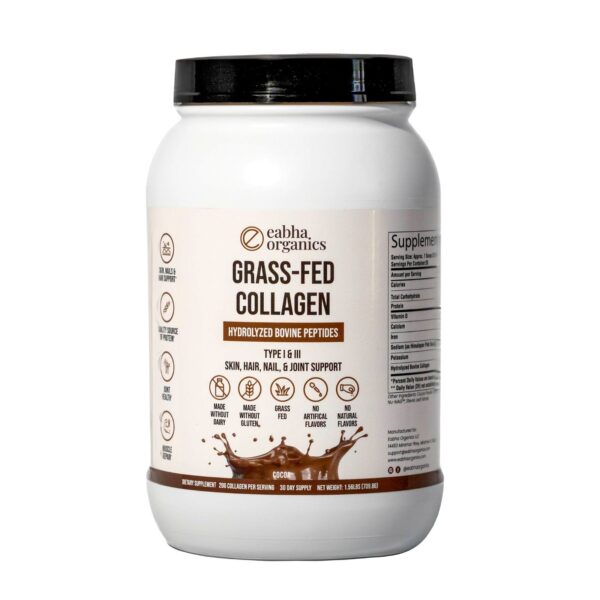
Our Grass-Fed Chocolate Collagen provides 20 grams of protein per serving, with Type I and Type III collagen peptides. We chose a chocolate formula that can be mixed into a drink or incorporated into your daily routine without making supplementation unnecessarily complicated.
We also pay close attention to what goes into our products. Our approach focuses on avoiding artificial flavors, unnecessary additives, and ingredients that do not serve a clear purpose in the formula.
For us, a good supplement is not about making the biggest claims. It’s about knowing what you’re taking, understanding what it can realistically offer, and choosing a product that fits your needs.
Collagen peptides are generally easy to incorporate into everyday routines. Depending on the product, they can be mixed into water, smoothies, coffee, or other beverages. Our chocolate collagen can also be added to suitable recipes if you prefer getting creative in the kitchen.
Consistency may be useful when evaluating a supplement, but more is not automatically better. Follow the serving instructions on the product label, and remember that your total diet matters more than any single supplement.
If you’re using collagen to support skin or joint health, keep your expectations realistic. Research findings are promising in some areas but are not definitive, and results are not guaranteed.
If your main goal is muscle growth, make sure you’re also getting enough complete protein throughout the day, following an appropriate training program, and recovering adequately.
Not all collagen products are identical, so it’s worth paying attention to a few details before choosing one.
Look at the collagen source and type. Products may use bovine, marine, or other sources of collagen. The type of collagen and the form used can vary, so consider what the product is designed to provide.
Check the amount per serving. A transparent label should tell you how much collagen or collagen peptides you’re getting rather than hiding the amounts in a proprietary blend.
Review the full ingredient list. Look for a formula that fits your preferences and clearly identifies its ingredients. A long ingredient list does not automatically make a supplement better.
Consider the quality standards. Manufacturing practices, appropriate quality testing, and transparent product information can help you make a more informed choice.
Finally, think about your goal. If you want a complete protein to support muscle growth, collagen alone is not the right substitute for one. If you’re interested in supplementing with collagen peptides as part of a broader approach to skin or joint health, a clearly labeled product may be worth considering.
Collagen is an important protein that helps provide structure to the skin, bones, tendons, ligaments, and other connective tissues. Research suggests that collagen peptide supplements may offer benefits for certain aspects of skin health and joint comfort, although the evidence is still developing.
Other commonly promoted benefits, particularly for gut health, hair growth, and nail strength, are less well established.
It’s also important to remember that collagen is not a complete protein. If you want to build muscle and support overall nutritional needs, it should complement rather than replace complete protein sources in your diet.
At Eabha Organics, we believe in keeping supplementation simple. Our Grass-Fed Chocolate Collagen provides 20 grams of protein per serving, Type I and III collagen peptides, and a straightforward formula designed to fit into your routine.
Less hype. More substance. That’s the approach we believe supplements should take.
— Eabha Organics
When a headache strikes, it’s natural to want relief as quickly as possible. The good news is that some simple habits may help ease headache pain,
If you’re trying to lose weight, you probably think about your diet, your workouts, and how many calories you eat. But there’s another factor that matters: how much you move throughout the day.
GLP-1 is a natural hormone that helps regulate blood sugar and appetite. Some medications mimic its effects, helping people feel full, eat less, and manage certain health conditions.
The ketogenic diet has become popular among people who want to lose body fat, improve their health, or change their body composition. By cutting carbohydrates and eating more fat, the goal is to get the body to rely more heavily on fat for fuel.
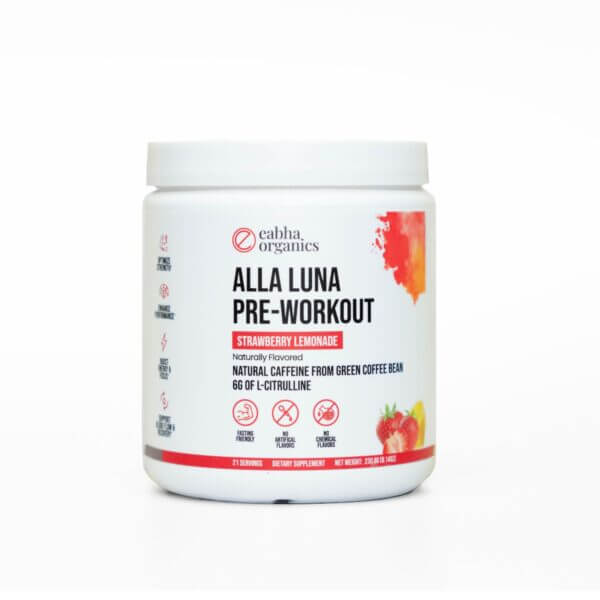
Whether you’re getting ready for a workout, heading out for the evening, or simply need a little extra energy and focus during the day, Alla Luna was designed to be a versatile part of your routine.
At Eabha Organics, collagen is one of our favorite protein supplements. Not because we believe it’s the only protein you need or that it’s better than every other option, but because collagen offers something different.





One Response