
How to Improve Your Gut Health Naturally
Your gut health plays an important role in your overall well-being. Your digestive system helps break down food, absorb nutrients, and support many of the processes your body relies on every day.
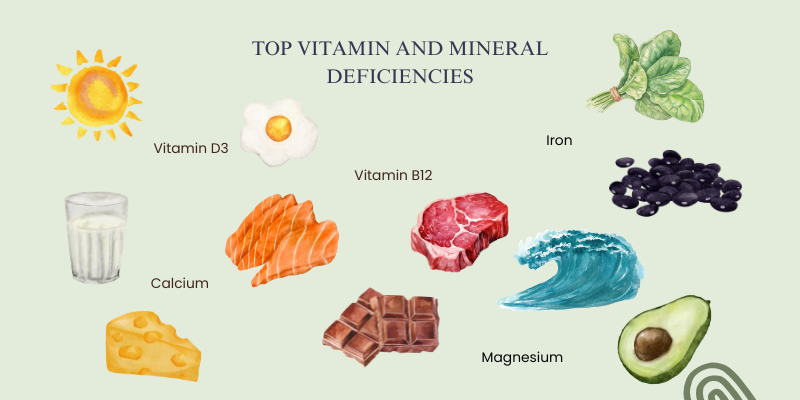
Vitamin and mineral deficiencies can affect your health in a number of ways, but the reasons people fall short of important nutrients today aren’t always as simple as not having enough food available.
In the US, most people have access to a wide variety of foods. However, certain nutrients can still be difficult to get enough of, especially for people with restrictive diets, certain health conditions, increased nutritional needs, or limited access to nutrient-rich foods.
Some people may also have adequate overall calorie intake while still falling short on specific vitamins and minerals.
Here are five important nutrients that people in the US may not get enough of, along with who is most at risk and how to get more of them.
Vitamin D is one of the nutrients that gets the most attention when it comes to inadequate intake and low blood levels.
Your body needs vitamin D to help absorb calcium and maintain healthy bones. It also plays important roles in muscle function and normal immune function.
People who spend little time outdoors, have darker skin, are older, or have limited dietary sources of vitamin D may be more likely to have inadequate levels.
Vitamin D is found naturally in relatively few foods. Fatty fish such as salmon, tuna, and trout are among the better sources. Egg yolks and some mushrooms also provide vitamin D, while many foods such as milk and some plant-based milk alternatives are fortified with it.
Sunlight can also contribute to vitamin D production, although the amount your body makes depends on factors such as skin pigmentation, season, location, time of day, and how much skin is exposed. Because UV exposure also increases skin-cancer risk, intentionally increasing sun exposure isn’t the best general recommendation for getting vitamin D.
For people who are not getting enough through food or who have been found to have low vitamin D levels, a supplement may be appropriate. However, more isn’t necessarily better, and high-dose supplementation should generally be discussed with a healthcare professional.
Magnesium is an essential mineral involved in hundreds of processes throughout the body.
It helps support normal muscle and nerve function, energy production, bone health, blood glucose regulation, and normal heart rhythm.
Many Americans consume less magnesium from food and beverages than recommended, but that doesn’t mean that half of the population has a clinical magnesium deficiency.
Good food sources include nuts and seeds, legumes, whole grains, leafy green vegetables, and some dairy products.
For example, almonds, pumpkin seeds, black beans, spinach, and whole grains can all contribute meaningful amounts of magnesium to your diet.
Getting magnesium from a variety of foods is a good place to start. Supplements can also be useful when dietary intake is not enough or when a healthcare professional recommends them.
If you choose a supplement, pay attention to the form and amount of magnesium rather than assuming that a higher dose is automatically better.
Iron is another nutrient that deserves attention, particularly for certain groups.
Your body uses iron to make hemoglobin, the protein in red blood cells that carries oxygen throughout the body. Iron is also involved in normal energy metabolism, muscle function, and other important processes.
Iron deficiency is more common in certain populations, including women of reproductive age, particularly those with heavy menstrual bleeding, and pregnant women.
People following vegetarian or vegan diets can also have a higher risk of inadequate iron intake because plant-based iron is less readily absorbed than the heme iron found in animal foods. However, a well-planned plant-based diet can still provide enough iron.
Good sources include meat, poultry, seafood, beans, lentils, tofu, spinach, fortified cereals, and other iron-rich foods.
Vitamin C can also improve the absorption of non-heme iron from plant foods.
It’s important not to automatically take an iron supplement just because you feel tired. Fatigue can have many causes, and too much iron can be harmful. If iron deficiency is suspected, a healthcare professional can use blood tests to determine whether supplementation is appropriate.
Vitamin B12 is essential for red blood cell formation, DNA synthesis, and normal nervous-system function.
Unlike many other vitamins, B12 is naturally found primarily in animal-derived foods, including meat, fish, poultry, eggs, and dairy products. Many fortified foods can also provide B12.
People following vegan diets are at particular risk of inadequate B12 intake unless they regularly consume fortified foods or use a B12 supplement.
Older adults may also be more likely to have problems absorbing B12 from food. Certain medications and medical conditions can affect B12 absorption as well.
B12 deficiency can develop gradually, so symptoms may not always be obvious at first. Possible signs include fatigue, weakness, numbness or tingling, and certain types of anemia, although these symptoms can have many other causes.
For people who don’t get enough B12 through their diet, a supplement can be a simple way to meet their needs.
Calcium is best known for its role in maintaining strong bones and teeth, but that’s not all it does.
Your body also needs calcium for normal muscle contraction, nerve signaling, and blood clotting.
Many people don’t consume enough calcium-rich foods to consistently meet their recommended intake. This can be more challenging for people who avoid dairy products, have lactose intolerance, or follow diets that exclude many calcium-rich foods.
Good sources include milk, yogurt, cheese, calcium-fortified plant-based milk, canned fish with bones, tofu made with calcium, and some leafy green vegetables.
It’s also important to remember that not every leafy green vegetable provides calcium in the same way. Some vegetables, such as kale and bok choy, provide calcium that is relatively well absorbed, while others contain compounds that reduce calcium absorption.
If you aren’t getting enough calcium through food, a supplement may sometimes be useful. However, taking large amounts of calcium without considering your overall diet isn’t necessarily better.
Nutrient inadequacy doesn’t necessarily mean that someone has a poor diet.
Your nutritional needs can vary depending on your age, sex, pregnancy status, activity level, diet, medications, and overall health.
For example, someone who avoids animal products needs to pay particular attention to nutrients such as vitamin B12 and iron. Someone who avoids dairy may need to find other reliable sources of calcium.
Some medical conditions can also affect how nutrients are absorbed or used by the body.
That’s why there’s no single supplement routine that everyone needs.
The goal is to identify what your diet may be missing and address those gaps appropriately.
For most people, a varied diet is the best foundation for getting the vitamins and minerals the body needs.
Foods such as fruits, vegetables, whole grains, beans, lentils, nuts, seeds, dairy or fortified alternatives, seafood, eggs, and lean proteins can provide a wide range of essential nutrients.
A balanced diet doesn’t need to be perfect.
The more variety you have in your diet, the more opportunities you have to get different vitamins, minerals, fiber, protein, and other beneficial nutrients.
Supplements can be useful, but they should generally complement a nutritious diet rather than replace it.
Not necessarily.
Some people can meet their nutritional needs through food alone, while others may benefit from supplementation because of their diet, life stage, medical history, or a confirmed deficiency.
This is especially important with nutrients such as iron, vitamin D, and calcium, where taking more than you need isn’t necessarily beneficial.
If you think you may have a deficiency, don’t rely on symptoms alone. Many symptoms associated with nutrient deficiencies—such as fatigue, weakness, or difficulty concentrating—can have many different causes.
A healthcare professional can determine whether testing is appropriate and help you decide whether a supplement is necessary.
The US has an abundant food supply, but that doesn’t mean everyone automatically gets enough of every vitamin and mineral.
Vitamin D, magnesium, iron, vitamin B12, and calcium are five nutrients worth paying attention to, particularly for people who have higher needs or diets that may make certain nutrients harder to obtain.
The best place to start is with a varied, nutrient-rich diet.
And when food alone isn’t enough, the right supplement can help fill a genuine nutritional gap.
You don’t need to take every vitamin and mineral just because you can.
The goal isn’t to take more supplements. It’s to get the nutrients your body actually needs.
— Eabha Organics
Your gut health plays an important role in your overall well-being. Your digestive system helps break down food, absorb nutrients, and support many of the processes your body relies on every day.
Anxiety is something many people experience at different points in their lives. Whether it’s caused by work, financial pressure, relationships, or everyday stress, feeling anxious can affect your mood, sleep, concentration, and overall well-being.
When a headache strikes, it’s natural to want relief as quickly as possible. The good news is that some simple habits may help ease headache pain,
If you’re trying to lose weight, you probably think about your diet, your workouts, and how many calories you eat. But there’s another factor that matters: how much you move throughout the day.
GLP-1 is a natural hormone that helps regulate blood sugar and appetite. Some medications mimic its effects, helping people feel full, eat less, and manage certain health conditions.
The ketogenic diet has become popular among people who want to lose body fat, improve their health, or change their body composition. By cutting carbohydrates and eating more fat, the goal is to get the body to rely more heavily on fat for fuel.