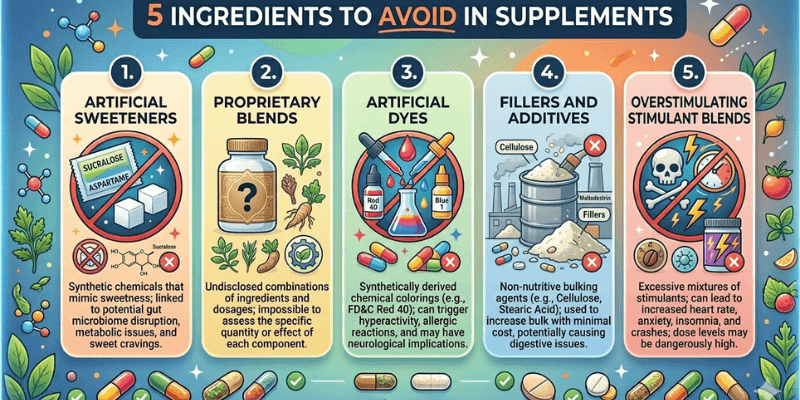
5 Ingredients to Avoid in Supplements
The supplement industry has exploded over the last decade, with countless products now marketed for energy, muscle growth, recovery, beauty, wellness, and overall health. From pre-workouts and protein powders to collagen supplements and greens powders, consumers today have more choices than ever before.
But while many products are advertised as “healthy,” not all supplements are created with the same level of quality, transparency, or ingredient standards.
Many formulas on the market today contain artificial ingredients, excessive fillers, proprietary blends, and highly processed additives that consumers may not even realize they are consuming daily.
As people become more educated about health and wellness, more consumers are starting to pay closer attention to ingredient labels and seek out cleaner, more transparent supplement options.
So what should you actually look out for when reading a supplement label?
Here are five ingredients many consumers prefer to avoid when choosing supplements, and why ingredient transparency matters more than ever.
⸻
1. Artificial Sweeteners
Artificial sweeteners are one of the most common additives found in modern supplements.
They are frequently used in:
- pre-workouts
- protein powders
- collagen supplements
- hydration products
- energy drinks
- BCAA formulas
Some of the most commonly used artificial sweeteners include:
- sucralose
- aspartame
- acesulfame potassium (Ace-K)
Supplement companies often use these ingredients because they create extremely sweet flavors without adding sugar or calories.
Many ingredients used in supplements naturally have bitter or unpleasant tastes. Artificial sweeteners help mask those flavors and create products that taste sweeter and more appealing to consumers.
However, many people today are becoming more conscious about ingredient quality and prefer supplements with fewer processed additives and cleaner ingredient profiles.
Some consumers also find heavily sweetened supplements overly artificial in taste and prefer more balanced or naturally flavored products instead.
Learning how to identify artificial sweeteners on a label can help consumers better understand what is actually inside their supplements.
If you want to learn more about this topic, check out our article on artificial sweeteners in supplements and what to know before choosing a product.
⸻
2. Proprietary Blends
One of the biggest red flags many consumers look for on a supplement label is the term “proprietary blend.”
A proprietary blend combines multiple ingredients together under one total dosage amount without disclosing the exact amount of each ingredient individually.
For example, a label may say:
“Performance Matrix – 8,000 mg”
But the company may not explain how much:
- caffeine
- citrulline
- beta-alanine
- creatine
- or other active ingredients
are actually included.
This creates a lack of transparency and makes it difficult for consumers to determine whether a supplement contains clinically effective dosages.
In some cases, companies may use proprietary blends to make formulas appear more advanced or impressive than they really are.
Many consumers today prefer fully transparent labels that clearly show:
- exact ingredient dosages
- stimulant amounts
- serving sizes
- complete ingredient breakdowns
Transparent labeling allows customers to make more informed decisions and compare products more accurately.
⸻
3. Artificial Dyes and Coloring
Artificial food dyes are another ingredient many consumers choose to avoid in supplements.
These dyes are commonly added simply to improve the appearance of products and make flavors appear brighter or more visually appealing.
Some common artificial dyes include:
These ingredients are often found in:
- powdered drink mixes
- pre-workouts
- flavored hydration products
- gummy supplements
- energy formulas
For many consumers, artificial coloring serves little nutritional purpose and is viewed as an unnecessary additive.
As the clean-label movement continues to grow, more people are looking for products with simpler ingredient lists and fewer artificial ingredients overall.
Many brands are now moving toward cleaner formulas with reduced artificial additives and more transparent ingredient standards.
⸻
4. Excess Fillers and Additives
Some supplement labels contain long lists of additional ingredients that are not directly related to the active formula itself.
These may include:
- gums
- preservatives
- anti-caking agents
- artificial flavor systems
- stabilizers
- texture enhancers
- unnecessary fillers
While certain additives can serve manufacturing purposes, many consumers today prefer products with more minimal ingredient profiles focused primarily on active ingredients.
In some cases, consumers may purchase a supplement expecting high-quality nutrition, only to realize the product contains numerous added ingredients unrelated to performance or wellness goals.
This is why reading labels carefully has become increasingly important.
A shorter, cleaner ingredient list is often viewed by consumers as a sign of a more transparent and thoughtfully formulated product.
⸻
5. Overstimulating Stimulant Blends
Many modern pre-workout supplements are heavily focused on stimulation.
Some formulas contain extremely high caffeine levels or combine multiple stimulants into one product in an attempt to create stronger energy effects.
While some individuals enjoy high-stimulant products, others may experience:
- jitters
- anxiety
- energy crashes
- restlessness
- difficulty sleeping
- increased heart rate
More stimulation does not always equal better performance.
Many consumers today are moving toward more balanced pre-workout formulas that focus on:
- ingredient quality
- effective dosing
- sustained energy
- overall workout performance
Instead of simply maximizing stimulants, many people now prefer products that support performance without excessive stimulation or harsh ingredient combinations.
⸻
Why Ingredient Transparency Matters
As the supplement industry continues to grow, consumers are becoming more educated and selective about the products they purchase.
People today want to know:
- what ingredients they are consuming
- how much of each ingredient is included
- whether formulas are transparent
- and whether products align with their personal health goals
Brands that prioritize transparency and cleaner formulations are becoming increasingly popular among health-conscious consumers.
Learning how to read supplement labels and understand ingredient quality can help consumers make more informed choices and avoid unnecessary additives.
⸻
What to Look for Instead
When evaluating supplements, many consumers now prioritize:
- transparent ingredient labels
- clearly disclosed dosages
- balanced formulations
- fewer unnecessary additives
- cleaner ingredient profiles
- quality sourcing
- products aligned with their personal wellness goals
The goal is not necessarily perfection, but rather becoming a more informed consumer and understanding what is actually inside the products you use daily.
⸻
Final Thoughts
Not all supplements are created equally, and understanding ingredient labels has become more important than ever.
While every consumer has different preferences and goals, many people today are becoming more mindful about ingredient transparency, product quality, and avoiding unnecessary additives.
Taking the time to research ingredients and evaluate supplement labels can help you make more confident and informed choices when selecting products for your health and wellness routine.
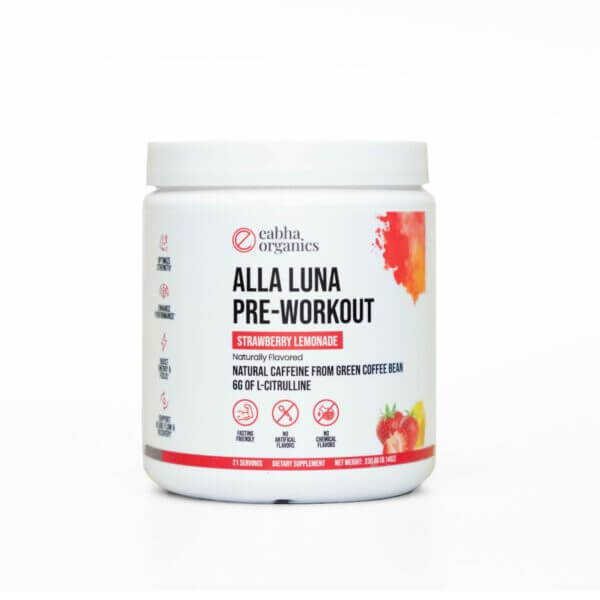
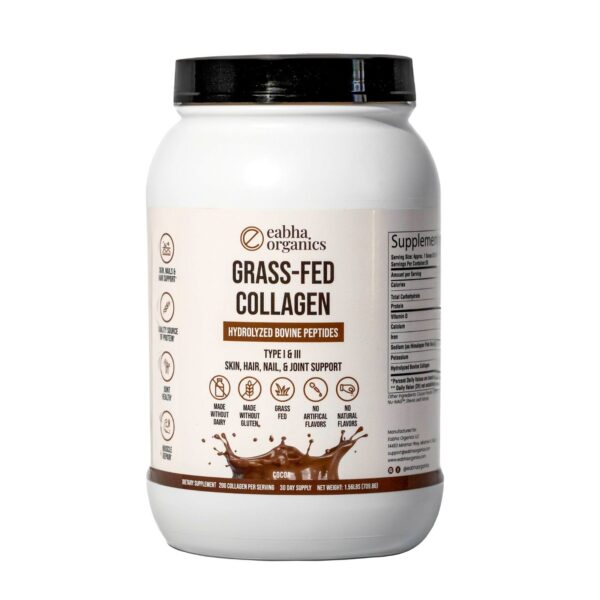
If you’re looking for supplements without artificial flavors or unnecessary additives, you can explore Eabha Organics’ Grass-Fed Collagen and Alla Luna Pre-Workout. Both products are formulated with a focus on clean ingredients and do not include artificial flavors, harsh additives, or unnecessary fillers.