What Is a Healthy Body Weight? How Height, BMI & Body Composition Matter
When people talk about a “healthy weight,” it’s easy to think there’s one specific number everyone should aim for.
But it’s not quite that simple.
A healthy body weight depends on several factors, including your height, body composition, muscle mass, age, sex, and overall health. Two people can weigh the same amount and have very different levels of body fat, muscle, and fitness.
That’s why your weight can be useful information, but it shouldn’t be the only thing you look at.
How Does Height Affect Healthy Body Weight?
Height plays an important role in determining a healthy weight because a taller person naturally has a larger body.
For example, it wouldn’t make sense to expect someone who is 6’2” to weigh the same as someone who is 5’2”. Their bodies have different amounts of bone, muscle, organs, and other tissues.
This is one reason health professionals often consider weight in relation to height rather than looking at weight by itself.
One commonly used measurement is body mass index, or BMI.
What Is BMI?
BMI is a calculation that uses your weight and height to estimate whether your weight falls within a general range.
For adults, BMI categories are generally:
- Underweight: below 18.5
- Healthy weight: 18.5–24.9
- Overweight: 25.0–29.9
- Obesity: 30.0 or higher
BMI can be useful as a simple screening tool, but it has an important limitation: it doesn’t measure body fat directly.
That matters because muscle is denser than fat.
A person who lifts weights regularly may have a relatively high BMI because they carry more muscle, even though their body-fat level may be healthy.
This is why BMI is best viewed as one piece of information rather than a complete assessment of someone’s health.
Body Fat Percentage Tells You More
If you’re interested in body composition, body-fat percentage can provide information that body weight alone cannot.
Your body weight is made up of several things, including:
- Muscle
- Fat
- Bone
- Organs
- Water
- Other tissues
Body-fat percentage estimates how much of your total body weight comes from fat.
For example, two people could both weigh 180 pounds, but one might have significantly more muscle and less body fat than the other.
Their scale weight is identical, but their body composition is different.
That’s why someone who is trying to build muscle or improve their physique may care more about body composition than simply trying to reach a certain number on the scale.
Muscle Mass Changes How You Should Look at Weight
Muscle mass is another reason a “healthy weight” can’t be reduced to one universal number.
Resistance training can increase muscle mass while reducing body fat or keeping it relatively stable. In that situation, the number on the scale may not change much even though body composition has improved.
This can be especially important for people who exercise regularly.
If you’re gaining muscle, losing fat, or maintaining a healthy body-fat level, focusing exclusively on the scale can give you an incomplete picture of your progress.
Measurements such as waist circumference, body-fat estimates, strength, fitness, and how you feel can provide additional context.
Is There an Ideal Body-Fat Percentage?
There isn’t one body-fat percentage that is ideal for every person.
Healthy ranges can vary based on factors such as sex, age, genetics, and the method used to measure body fat.
It’s also important to remember that body-fat measurements aren’t perfectly precise. Home scales, handheld devices, skinfold measurements, and other methods can produce different results.
Rather than becoming overly focused on a single percentage, it can be more useful to look at your overall trend and consider it alongside other health measures.
Why Waist Size Matters Too
Where your body stores fat can also matter.
Fat stored around the abdomen, particularly visceral fat around internal organs, is associated with greater metabolic and cardiovascular risk.
This is one reason waist circumference can sometimes provide useful information in addition to BMI and body weight.
A person can have a weight that doesn’t immediately appear concerning while still carrying a relatively high amount of abdominal fat.
Again, no single measurement tells the whole story.
So What Is a Healthy Body Weight?
There isn’t one perfect weight that applies to everyone.
A healthier way to think about body weight is to consider several factors together:
Height: Gives context to your body weight.
BMI: Provides a simple screening measure based on height and weight.
Body-fat percentage: Gives an estimate of how much of your weight comes from fat.
Muscle mass: Helps explain why two people at the same weight can look and perform very differently.
Waist circumference: Provides additional information about abdominal fat and health risk.
Overall health: Blood pressure, cholesterol, blood sugar, fitness, diet, sleep, and other health factors matter too.
This broader approach gives you a much better picture than asking whether a particular number on the scale is “good” or “bad.”
Should You Focus on the Scale?
That depends on your goal.
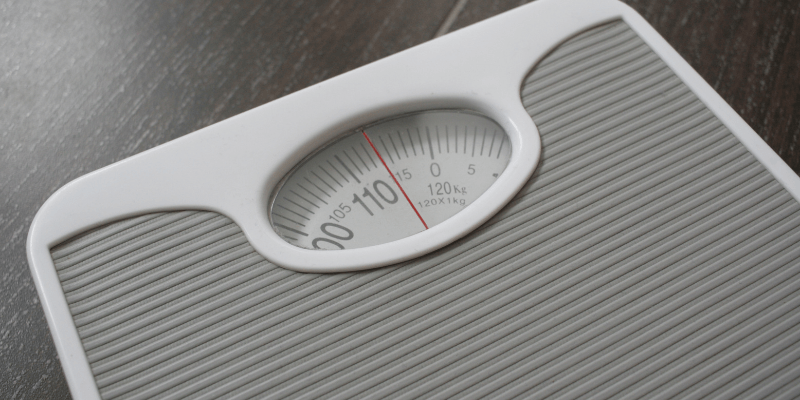
If you’re trying to lose excess body fat, regular weigh-ins can be useful for tracking trends over time. But daily weight naturally fluctuates because of hydration, food, sodium, digestion, and other factors.
If you’re building muscle, the scale may move more slowly or even stay relatively stable while your body composition changes.
For that reason, it’s often better to look at trends rather than individual weigh-ins and combine scale weight with other measurements.
Progress photos, waist measurements, strength, fitness, and how your clothes fit can all provide useful information.
The Bottom Line
A healthy body weight isn’t one specific number.
Your height matters, but so does your body composition. BMI can provide a useful starting point, but it doesn’t distinguish between muscle and fat. Body-fat percentage, waist circumference, muscle mass, and overall health can add important context.
Instead of asking, “What should I weigh?” a better question may be:
“Does my weight and body composition support my overall health?”
For many people, that’s a much more useful way to think about healthy weight.