
5 Natural Ways to Relieve a Headache
When a headache strikes, it’s natural to want relief as quickly as possible. The good news is that some simple habits may help ease headache pain,

Walk into any supplement store, and you’ll quickly notice two of the most popular protein supplements on the market: whey protein and collagen.
Both offer unique health benefits, but they’re designed for different purposes. While many people assume they’re interchangeable, that’s not actually the case.
Understanding the differences between whey protein vs collagen can help you choose the right supplement based on your personal health and fitness goals.
Let’s take a closer look at how they compare.
Whey protein is a complete protein derived from milk during the cheese-making process. It contains all nine essential amino acids that your body cannot produce on its own.
One of whey protein’s biggest advantages is its high concentration of branched-chain amino acids (BCAAs), especially leucine. Leucine plays a major role in stimulating muscle protein synthesis, making whey one of the best protein sources for building and maintaining muscle.
Because whey digests quickly and is easily absorbed, it’s commonly consumed after resistance training to support recovery and muscle growth.
Some of the most well-known benefits of whey protein include:
For athletes, bodybuilders, and anyone trying to build muscle, whey protein remains one of the most researched and effective protein supplements available.
Potential Downsides of Whey Protein
Although whey works well for many people, it isn’t the perfect choice for everyone.
Digestive Issues
Because whey is derived from dairy, some people experience digestive discomfort.
Individuals with lactose intolerance may experience:
While whey isolate contains much less lactose than whey concentrate, sensitive individuals may still prefer a dairy-free alternative.
Skin Concerns
Some research has suggested a possible association between dairy intake and acne in certain individuals.
The evidence is still mixed, and researchers have not confirmed that whey protein directly causes acne. However, some people report fewer breakouts after reducing dairy intake.
If you’ve noticed a personal connection between dairy products and your skin, it may be worth discussing with your healthcare provider.
Collagen is the most abundant protein in the human body.
It provides structure and support for many tissues, including:
Unlike whey protein, collagen is not considered a complete protein because it contains relatively low amounts of certain essential amino acids.
Instead, collagen is naturally rich in glycine, proline, and hydroxyproline—amino acids that play important roles in connective tissues throughout the body.
Most collagen supplements are made from hydrolyzed collagen peptides, which are broken down into smaller peptides for easier digestion and mixing.
While collagen isn’t designed primarily for muscle building, it offers several potential benefits that make it unique.
Research suggests collagen supplementation may help support:
Many people choose collagen as part of a long-term wellness routine rather than simply as another source of protein.
When comparing whey protein vs collagen for building muscle, whey protein is the clear winner.
Because whey contains all essential amino acids and significantly more leucine, it stimulates muscle protein synthesis much more effectively than collagen.
That doesn’t mean collagen has no place in an active lifestyle.
Collagen still contributes protein and may help support connective tissues such as tendons and ligaments, which experience significant stress during resistance training.
For someone focused purely on maximizing muscle growth, whey protein is generally the better choice.
This is where collagen has a clear advantage.
Unlike whey protein, collagen contains high amounts of glycine, proline, and hydroxyproline, amino acids that are important components of healthy connective tissues.
Research suggests that consistent collagen supplementation may help support:
Many studies that observed improvements in skin health used hydrolyzed collagen peptides over a period of 8 to 12 weeks.
While collagen isn’t a miracle supplement, it may help support healthy skin and joints when combined with a balanced diet and healthy lifestyle.
Digestion varies from person to person.
Whey protein is generally easy to digest for most healthy individuals.
However, because it comes from dairy, people with lactose intolerance or dairy sensitivities may experience bloating, gas, or stomach discomfort.
Collagen, on the other hand, contains no dairy and is often well tolerated by people looking for an alternative protein source.
For individuals who struggle with dairy, collagen may be the more comfortable option.
Absolutely.
Many people think they have to choose one or the other, but they actually serve different purposes.
For example:
Because they provide different amino acid profiles, many people include both as part of a balanced nutrition plan.
The answer depends on your goals.
Both supplements have value—they simply serve different purposes.
If you decide collagen is a good fit for your routine, choosing a quality product matters.
Look for a collagen supplement that contains:
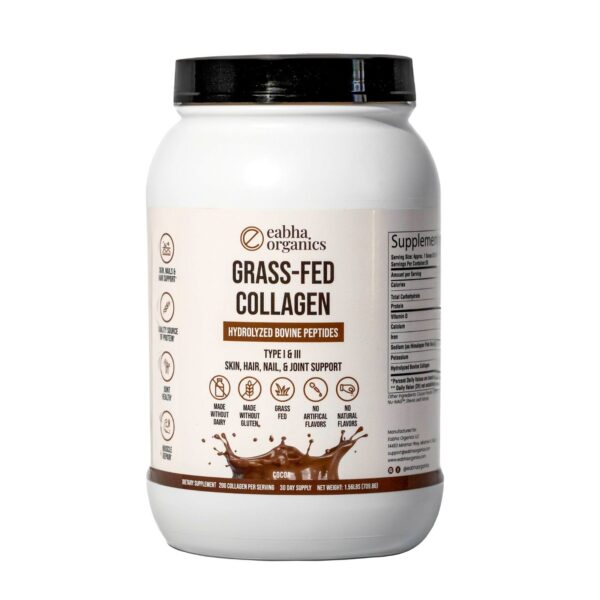
At Eabha Organics, our Grass-Fed Collagen is made with hydrolyzed bovine collagen peptides and crafted with simple ingredients. We don’t use artificial flavors, artificial sweeteners, or unnecessary fillers because we believe quality ingredients should speak for themselves.
Whether you’re adding collagen to support healthy skin, joints, or your overall wellness routine, consistency is far more important than expecting overnight results.
When comparing whey protein vs collagen, neither supplement is universally “better.”
Instead, each has its own strengths.
If your primary goal is building muscle and maximizing recovery after resistance training, whey protein is generally the better choice because it contains all essential amino acids and is especially rich in leucine.
If your goal is supporting healthy skin, joints, connective tissue, and healthy aging, collagen may be the better option.
For many people, the best solution isn’t choosing one over the other—it’s understanding how each protein fits into a healthy lifestyle.
No supplement can replace regular exercise, quality sleep, balanced nutrition, and consistency.
When used alongside healthy habits, both whey protein and collagen can play valuable roles in helping you achieve your long-term health and fitness goals.
When a headache strikes, it’s natural to want relief as quickly as possible. The good news is that some simple habits may help ease headache pain,
If you’re trying to lose weight, you probably think about your diet, your workouts, and how many calories you eat. But there’s another factor that matters: how much you move throughout the day.
GLP-1 is a natural hormone that helps regulate blood sugar and appetite. Some medications mimic its effects, helping people feel full, eat less, and manage certain health conditions.
The ketogenic diet has become popular among people who want to lose body fat, improve their health, or change their body composition. By cutting carbohydrates and eating more fat, the goal is to get the body to rely more heavily on fat for fuel.
Whether you’re getting ready for a workout, heading out for the evening, or simply need a little extra energy and focus during the day, Alla Luna was designed to be a versatile part of your routine.
At Eabha Organics, collagen is one of our favorite protein supplements. Not because we believe it’s the only protein you need or that it’s better than every other option, but because collagen offers something different.