Ashwagandha Benefits: What the Research Says & Why We Use KSM-66
Ashwagandha has become one of the most popular ingredients in the supplement world, especially in products designed around stress, sleep, recovery, and overall well-being.
But the conversation around ashwagandha can get confusing quickly.
You’ll find claims that it can “balance your hormones,” dramatically increase testosterone, eliminate stress, improve fertility, boost muscle growth, and fix poor sleep.
Some of those claims go far beyond what the research actually shows.
So what does ashwagandha really do?
Let’s take a closer look at what this traditional herb is, what the research suggests, how much has been studied, and why we chose 600 mg of KSM-66 ashwagandha for Eabha Organics Total Balance.
What Is Ashwagandha?
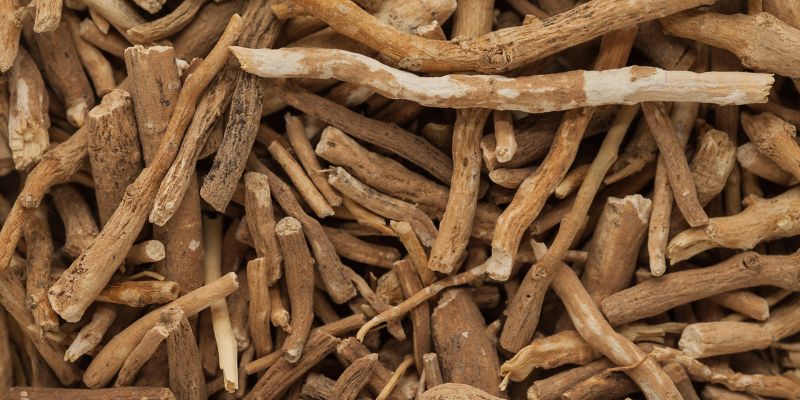
Ashwagandha is an herb made from Withania somnifera, a plant that has been used in Ayurvedic and Unani traditions for centuries.
The plant contains several bioactive compounds, including a group of compounds called withanolides. Most modern ashwagandha supplements use either the root or a combination of root and leaf extracts.
Ashwagandha is often described as an “adaptogen,” a term commonly used for botanicals that may help the body respond to different forms of stress. However, “adaptogen” is a broad term, and it doesn’t tell you exactly what an ingredient will do.
That’s why it’s more useful to look at the actual human research.
And when you do, the most interesting evidence around ashwagandha currently centers on stress and sleep.
Ashwagandha and Stress
Stress is one of the areas where ashwagandha has been studied most extensively.
Several randomized controlled trials have found that certain ashwagandha extracts may help reduce perceived stress compared with placebo. Some studies have also found reductions in cortisol, a hormone involved in the body’s response to stress.
A 2024 systematic review and meta-analysis of nine randomized controlled trials involving 558 participants found that ashwagandha formulations were associated with improvements in measures of perceived stress, anxiety, and serum cortisol compared with placebo.
That sounds promising, but there’s an important distinction to make.
Ashwagandha isn’t a treatment for every kind of stress, and it doesn’t mean taking it will automatically make you feel calm.
The studies have used different extracts, doses, and study populations, and many have been relatively small or short-term. The NIH notes that more research is needed to establish stronger conclusions.
So we think it’s more accurate to say that certain ashwagandha extracts may support a healthier response to stress rather than promising that the ingredient will eliminate stress.
Ashwagandha and Sleep
Sleep is another area where the research is encouraging.
Several clinical trials have investigated ashwagandha in people experiencing sleep problems. Results suggest that some extracts may improve aspects of sleep quality, sleep duration, sleep efficiency, and the time it takes to fall asleep.
A 2021 systematic review and meta-analysis found a small but significant improvement in sleep among people taking ashwagandha compared with placebo. The benefits appeared more noticeable in people experiencing insomnia and at doses around 600 mg per day in some studies.
Again, this doesn’t mean ashwagandha is a sleeping pill.
The research is better described as showing that certain ashwagandha extracts may support sleep quality, particularly when sleep is already an area of concern.
That distinction matters.
What About Cortisol?
You’ll often see ashwagandha marketed as a “cortisol blocker” or something that will “lower your cortisol.”
We think that oversimplifies what’s happening.
Cortisol is an important hormone that your body naturally produces. You don’t want to eliminate it. Your body needs cortisol for things like metabolism, blood pressure regulation, immune function, and responding to stress.
Some clinical studies have found that ashwagandha supplementation is associated with lower cortisol levels, but that doesn’t mean lower cortisol is automatically better.
The goal isn’t to have as little cortisol as possible.
The more useful question is whether an ingredient can support a healthier response to stress and contribute to overall well-being.
That is a much more accurate way to look at the research.
Can Ashwagandha Increase Testosterone?
This is one of the biggest claims you’ll see online.
There is some evidence that ashwagandha may increase testosterone levels in certain groups, but the evidence isn’t strong enough to describe it as a guaranteed testosterone booster.
The NIH notes that limited research suggests ashwagandha taken for two to four months may increase testosterone levels and improve sperm quality in some men.
That is interesting, but it doesn’t mean everyone taking ashwagandha will experience a meaningful increase in testosterone.
Studies have also used different preparations and doses, which makes it difficult to generalize the results to every ashwagandha supplement.
That’s why we don’t position Total Balance as a testosterone supplement.
Instead, we use ashwagandha as one part of a broader formula designed around overall nutritional support and well-being.
What About Ashwagandha for Women?
Ashwagandha is also frequently marketed toward women for fertility, menopause, PMS, hormones, and reproductive health.
This is an area where it’s especially important to separate marketing from evidence.
There simply isn’t enough high-quality evidence to say that ashwagandha reliably treats female infertility, menopause symptoms, or hormonal disorders.
That doesn’t mean research will never find useful applications. It simply means we shouldn’t make promises that the current evidence can’t support.
And this is one of the reasons we moved away from the old “ashwagandha balances your hormones” language.
Hormones are complicated, and symptoms such as fatigue, poor sleep, changes in mood, irregular periods, or changes in weight can have many different causes.
A supplement shouldn’t be presented as a replacement for figuring out what’s actually going on.
How Much Ashwagandha Has Been Studied?
One of the most important things to understand about ashwagandha is that not all ashwagandha supplements are the same.
Studies have used different parts of the plant, different extraction methods, different levels of withanolides, and different doses.
That makes it difficult to take the results from one study and assume they apply to every product on the market.
However, doses around 300–600 mg per day of standardized extracts appear frequently in clinical research, particularly in studies looking at stress and sleep.
The NIH notes that some studies found greater benefits around 500–600 mg per day than at lower doses, although the evidence is still limited and preparation matters.
This is one reason we pay attention to the actual extract and dose rather than simply putting “ashwagandha” on a label.
Why We Use 600 mg of KSM-66 in Total Balance
This is where the ingredient gets particularly interesting for us.
When we created Total Balance, we didn’t want to throw a handful of trendy ingredients into a bottle and call it a formula.
Every ingredient needs a reason to be there.
For the ashwagandha portion of the formula, we chose KSM-66, a standardized ashwagandha root extract, and included 600 mg per serving.
That dose wasn’t chosen just because 600 mg sounds impressive.
Research on standardized ashwagandha extracts has commonly used doses in this range, including clinical research using KSM-66 at 600 mg per day.
For example, an NIH-reviewed clinical trial investigating sleep used KSM-66 at 600 mg per day for eight weeks.
Of course, that doesn’t mean our product will produce the exact same results as a clinical trial.
Clinical studies are conducted under specific conditions, and different products can have differences in formulation, manufacturing, and use.
But it does mean we’re not relying on a tiny “pixie dust” amount of ashwagandha just so we can put it on the label.
We wanted a meaningful dose of a specific extract with human research behind it.
That’s the kind of formulation approach we believe in.
Why KSM-66?
KSM-66 is a branded ashwagandha root extract that has been used in a number of human clinical studies.
That matters because when you’re evaluating an herbal ingredient, the name of the plant alone doesn’t tell you everything you need to know.
Two products can both say “ashwagandha” on the front label while using different plant parts, extraction methods, standardizations, and doses.
So instead of treating all ashwagandha as interchangeable, we prefer to know exactly what form we’re putting into our formula.
That’s part of our broader philosophy at Eabha Organics:
The ingredient matters. The form matters. The dose matters.
What Should You Actually Expect From Ashwagandha?
This might be the most important part.
Ashwagandha isn’t something you should take expecting to suddenly feel completely different after one serving.
The human research generally looks at supplementation over weeks, not minutes.
Based on the current evidence, the most reasonable expectations are around areas such as:
- Supporting a healthy response to everyday stress
- Supporting sleep quality
- Supporting overall well-being
- Potentially supporting certain aspects of reproductive health in specific populations
What we wouldn’t promise is that ashwagandha will:
- “Balance” all of your hormones
- Cure anxiety
- Fix chronic stress
- Dramatically increase testosterone
- Treat infertility
- Replace sleep, nutrition, or medical care
Those claims go beyond what the evidence can currently support.
Is Ashwagandha Safe?
For most healthy adults, short-term studies suggest ashwagandha is generally well tolerated, but that doesn’t mean it’s completely risk-free.
Reported side effects can include stomach upset, loose stools, nausea, and drowsiness.
There have also been reports of liver injury associated with ashwagandha supplements, although these cases appear to be uncommon.
Long-term safety is also less well understood. Most of the available research has been relatively short, with many studies lasting several weeks to a few months.
Ashwagandha may also affect thyroid function and can interact with certain medications, including some medications for diabetes, blood pressure, thyroid conditions, immune suppression, and sedation.
Because of these considerations, people who are pregnant or breastfeeding, have thyroid or autoimmune conditions, have liver concerns, are preparing for surgery, or take medications should talk with a healthcare professional before using ashwagandha.
More isn’t always better with supplements.
A meaningful dose of a researched ingredient is one thing. Taking increasingly large amounts because you assume more will work better is another.
Why Ashwagandha Is Only One Part of Total Balance
We didn’t build Total Balance around one “magic” ingredient.
Ashwagandha is one piece of the formula.
The idea behind Total Balance is to combine carefully selected ingredients in meaningful amounts rather than relying on one ingredient to do everything.
That’s also why we don’t think of Total Balance as a product that’s supposed to “fix your hormones.”
Your body already has complex systems for regulating hormones, stress, sleep, metabolism, and reproduction.
Our goal is much simpler:
Give your body useful nutritional support without stuffing a formula full of unnecessary ingredients or making promises that a supplement can’t keep.
And that’s exactly why we wanted 600 mg of KSM-66 in the formula.
The Bottom Line
Ashwagandha is an interesting botanical with a growing body of human research behind it.
The strongest evidence currently points toward potential benefits for stress and sleep, while research into areas such as testosterone and reproductive health is more limited.
The research also shows why the details matter. Different ashwagandha extracts can contain different compounds and concentrations, so you can’t assume every product will have the same effects.
That’s why we chose 600 mg of KSM-66 ashwagandha root extract for Total Balance.
Not because we believe ashwagandha is a magic ingredient.
Not because we want to promise that it will “balance your hormones.”
And not simply because it’s popular.
We chose it because it’s a specific, researched extract that fits the purpose of the formula and is included at a meaningful dose.
That’s the approach we take with every ingredient at Eabha Organics.
Less hype. More transparency. Better formulas.




4 Responses